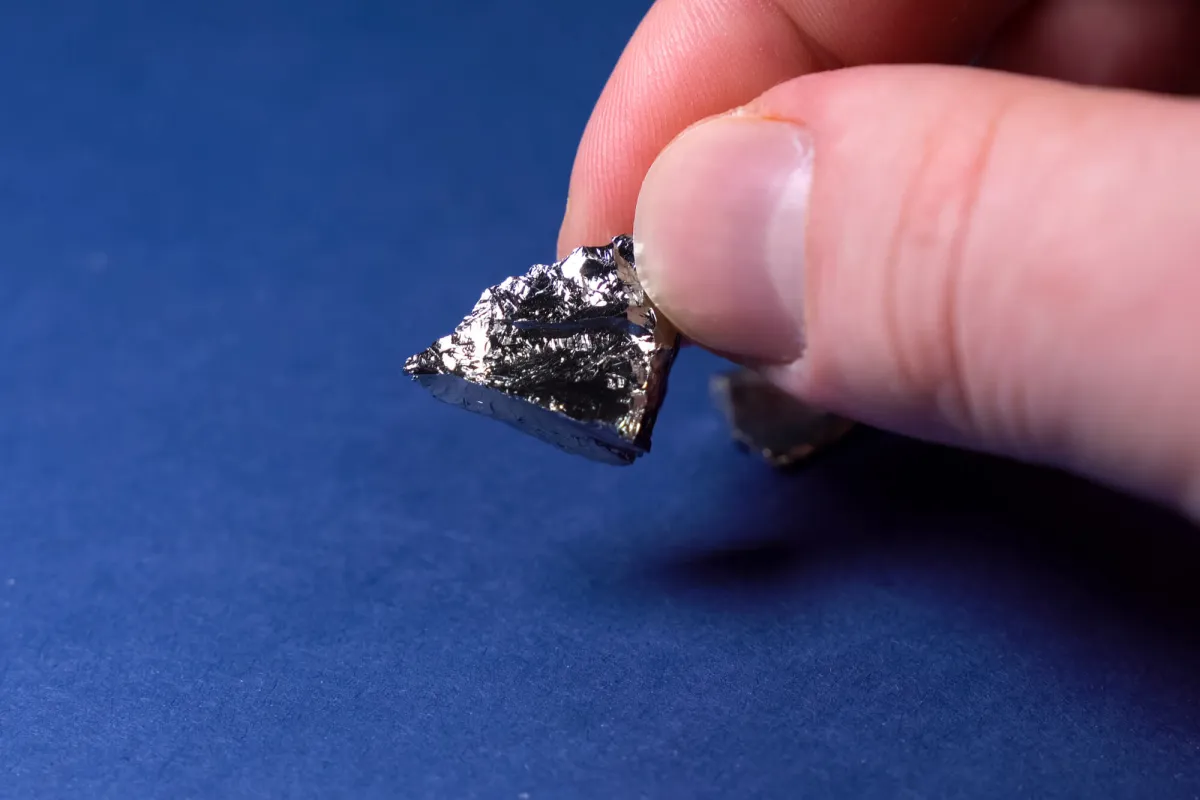
China’s recent decision to halt exports of key critical minerals, including germanium and gallium, has sent ripples through global markets, underscoring the deepening rift between Beijing and Washington over technology and supply chains. Announced on December 3, this export ban is widely seen as a retaliatory measure against U.S. restrictions on advanced technology sales to China. Yet for the Democratic Republic of Congo (DRC), it represents a rare opportunity to position itself as a critical supplier of germanium, a mineral essential to industries ranging from semiconductors to renewable energy.
The DRC, home to some of the world’s richest mineral deposits, is moving quickly to capitalize on the disruption. State-owned mining company Gécamines has already begun germanium production at the “Big Hill” tailings site in Lubumbashi, in partnership with Belgian materials giant Umicore. The collaboration, announced in May 2024, marks a pivotal step for Congo’s entry into the germanium supply chain. Initial exports to Belgium began in October, and with the completion of a $75 million hydrometallurgical plant, the DRC now has the capacity to produce up to 30 tonnes of germanium annually, alongside zinc oxide, copper, and cobalt.
The global demand for germanium, used in fiber optics, solar panels, and military-grade equipment, is expected to grow sharply as nations accelerate their renewable energy transitions. For decades, China has controlled nearly 70% of the global supply, giving Beijing outsized leverage over key industries. But its new export restrictions are poised to create gaps in the market, offering countries like the DRC a chance to step in as alternative suppliers.
Gécamines President Guy Robert Lukama has framed the moment as one of significant opportunity. “The scarcity created by China’s measures will increase the value of our germanium,” Lukama noted earlier this year, emphasizing the market potential of the Lubumbashi operations. The partnership with Umicore, a leader in refining and marketing critical materials, could also help the DRC gain credibility in global supply chains.
Yet, the road ahead is fraught with challenges. While Congo has the raw materials, it faces structural weaknesses that could impede its ability to capitalize fully on the germanium boom. Persistent infrastructure deficits, regulatory inefficiencies, and corruption remain formidable obstacles. Moreover, competition from other emerging producers, such as Australia and Kazakhstan, will likely intensify as nations scramble to diversify their critical mineral sources.
Western governments, particularly the United States and European Union, have a vested interest in Congo’s success. The EU recently included germanium in its updated Critical Raw Materials Act, which prioritizes diversifying imports to reduce reliance on China. Similarly, the U.S. Department of Defense, which heavily depends on germanium for advanced military technologies, has identified the mineral as a national security priority. With China tightening its grip on exports, the West may look to Congo as a strategic partner, provided the country can deliver on transparency and sustainability expectations.
Congo’s hydrometallurgical facility in Lubumbashi, designed to process tailings into high-value concentrates, is seen as a template for sustainable mining practices. Unlike traditional mining, which often involves deforestation and the displacement of communities, the use of tailings—essentially leftover material from earlier mining operations—represents a more environmentally conscious approach. Analysts believe this model could attract additional foreign investment, particularly as global markets place increasing emphasis on ESG (environmental, social, and governance) standards.
However, the stakes are high. Germanium may be a relatively niche market compared to Congo’s dominant exports of cobalt and copper, but its strategic importance cannot be overstated. The DRC produces more than 70% of the world’s cobalt, a critical component in electric vehicle batteries, but its dependence on this single commodity has left its economy vulnerable to price swings. Expanding into germanium and other critical minerals could offer a pathway toward a more diversified and resilient mining sector.
According to recent reports by Reuters, Congo aims to supply 30% of global germanium demand in the coming years, a bold target that would require substantial investment in refining capacity and supply chain infrastructure. But achieving this ambition will also demand reforms to address corruption and inefficiencies that have long plagued the country’s resource sector.