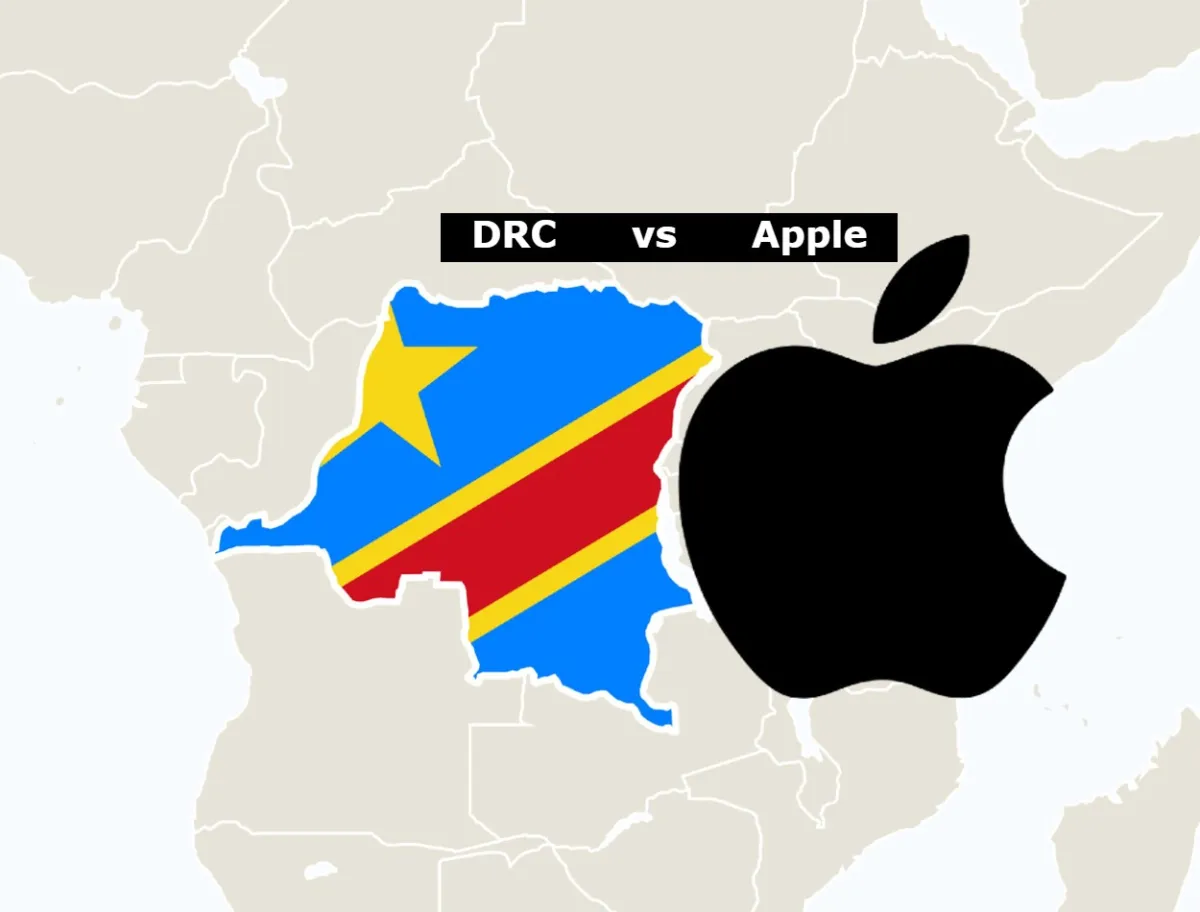
The Democratic Republic of Congo (DRC) has filed criminal complaints in France and Belgium against Apple subsidiaries, accusing the technology giant of sourcing minerals linked to armed conflict and human rights abuses.
Lawyers representing the Congolese government allege that Apple is complicit in crimes committed by armed groups controlling mineral-rich mines in eastern DRC. The minerals—primarily tin, tantalum, and tungsten—are critical for the production of smartphones, computers, and other electronics.
In its 2023 review submitted to the U.S. Securities and Exchange Commission, Apple said it takes rigorous steps to monitor its supply chain and reduce risks of using conflict minerals. The company stated that it does not directly purchase or source minerals but holds suppliers to strict standards, requiring third-party audits to ensure responsible sourcing.
“Although Apple does not directly procure primary minerals, we are committed to meeting and exceeding internationally accepted due diligence standards,” the company said. Apple also reported removing 14 smelters and refiners in 2023 for failing to meet responsible sourcing requirements.
However, the Congolese government’s lawyers described Apple’s supply chain as tainted with “blood minerals”—a term referring to materials extracted under conditions of violence, forced labor, and environmental degradation. They allege that minerals are smuggled out of conflict zones, laundered through international supply chains, and ultimately sold to technology companies.
“These activities fuel cycles of violence and conflict,” the lawyers said in a statement, “by financing militias and contributing to child labor and environmental destruction.”
Authorities in France and Belgium will determine whether there is sufficient evidence to advance the case.
The mineral-rich eastern region of the DRC has been at the heart of global supply chain controversies for decades. Rights groups and independent investigators have long accused armed groups of profiting from both legitimate mines and illicit operations, smuggling minerals across borders—particularly into neighboring Rwanda—before they enter the global market.
Critics argue that despite industry efforts, including Apple’s stated commitments, significant quantities of minerals extracted from conflict areas still make their way into consumer devices worldwide.