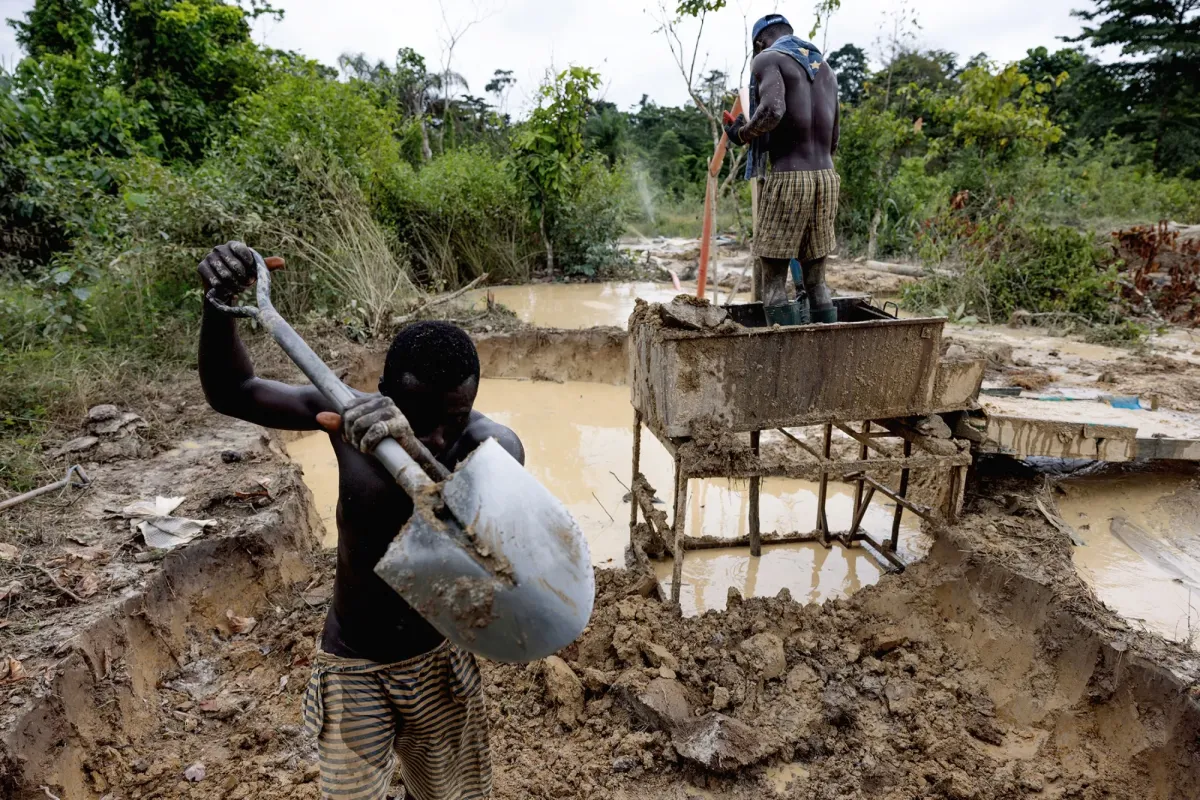
As Ghana heads to the polls this weekend, the issue of illegal gold mining, known locally as “galamsey,” has emerged as a critical focal point, underscoring the country’s complex struggle to balance economic needs with environmental preservation. With Vice President Mahamudu Bawumia of the ruling New Patriotic Party (NPP) and former president John Mahama of the opposition National Democratic Congress (NDC) locked in a tight race, galamsey has become a potent symbol of deeper national challenges—unemployment, poverty, and ecological degradation.
Ghana, the sixth-largest gold producer in the world and the second-largest cocoa exporter, faces mounting environmental destruction caused by unregulated mining. Once-thriving cocoa farms in regions like Western and Ashanti have been ravaged, with over 19,000 hectares lost to mining. Rivers such as the Pra and Ankobra, crucial for agriculture and drinking water, are contaminated with mercury and cyanide runoff, threatening both public health and food security. The Ghana Water Company has repeatedly warned that polluted water sources now jeopardize millions of livelihoods.
Despite government crackdowns, including military-led destruction of mining equipment and patrols to protect water bodies, illegal mining persists, fueled by high global gold prices and widespread unemployment. Illegal gold mining now accounts for 40% of the country’s gold production, employing more than one million people, many of whom operate outside formal regulations. This unregulated trade not only enriches shadow networks but also deprives the government of billions in revenue—over $1 billion in annual losses from gold smuggling, according to Ghana’s Finance Ministry.
While President Nana Akufo-Addo’s administration pledged to eradicate galamsey in 2017, the practice has expanded rather than diminished. Weak enforcement and allegations of collusion between local officials and criminal syndicates have undermined efforts to regulate the sector. The government’s reliance on force has failed to address the root causes of the crisis, such as the lack of viable alternative livelihoods for those dependent on mining.
The crisis extends beyond environmental damage, threatening Ghana’s global position as a cocoa-exporting powerhouse. Illegal mining has led to deforestation, soil degradation, and falling cocoa yields, endangering an industry that contributes over $2 billion annually to the economy. Meanwhile, the broader economic implications of galamsey are significant, as the destruction of fertile land and water resources jeopardizes agricultural productivity in regions already vulnerable to climate change.
Galamsey also looms large in the political discourse, with both major parties facing public scrutiny over their inability to address the crisis. Demonstrations have intensified in recent months, reflecting growing frustration with unfulfilled political promises. The issue has become a litmus test for government accountability and a rallying cry for a generation demanding urgent, sustainable solutions.
As Ghana prepares to elect its next president, the stakes are enormous. The incoming administration will face immense pressure to craft a comprehensive strategy that not only curtails illegal mining but also addresses its socio-economic drivers. Solutions may involve formalizing artisanal mining, fostering alternative employment opportunities, and enforcing stricter environmental protections. Without decisive action, Ghana risks further ecological damage, economic instability, and a diminished legacy as a resource-rich nation.