Norway’s minority government has agreed to scrap plans for its first deep-sea mining licensing round in the Arctic, bowing to demands from the leftwing Socialist Left (SV) party in exchange for its support on the national budget.
“We are stopping plans to open mining on the sea bed,” Kirsti Bergstø, leader of the SV party, declared on Sunday. Though outside the governing coalition, SV wields significant influence by providing critical support to the Labour-led minority government, and the deal marks a victory for environmentalists opposed to seabed mining.
The Norwegian government, which had initially planned to launch its inaugural exploration permits in the first half of 2025, stated that preparatory work for seabed mining would continue despite the suspension. This includes drafting regulations and conducting environmental impact studies. “This will be a postponement,” Prime Minister Jonas Gahr Støre of the Labour Party clarified in an interview with broadcaster TV2, leaving the door open for future discussions on the controversial practice.
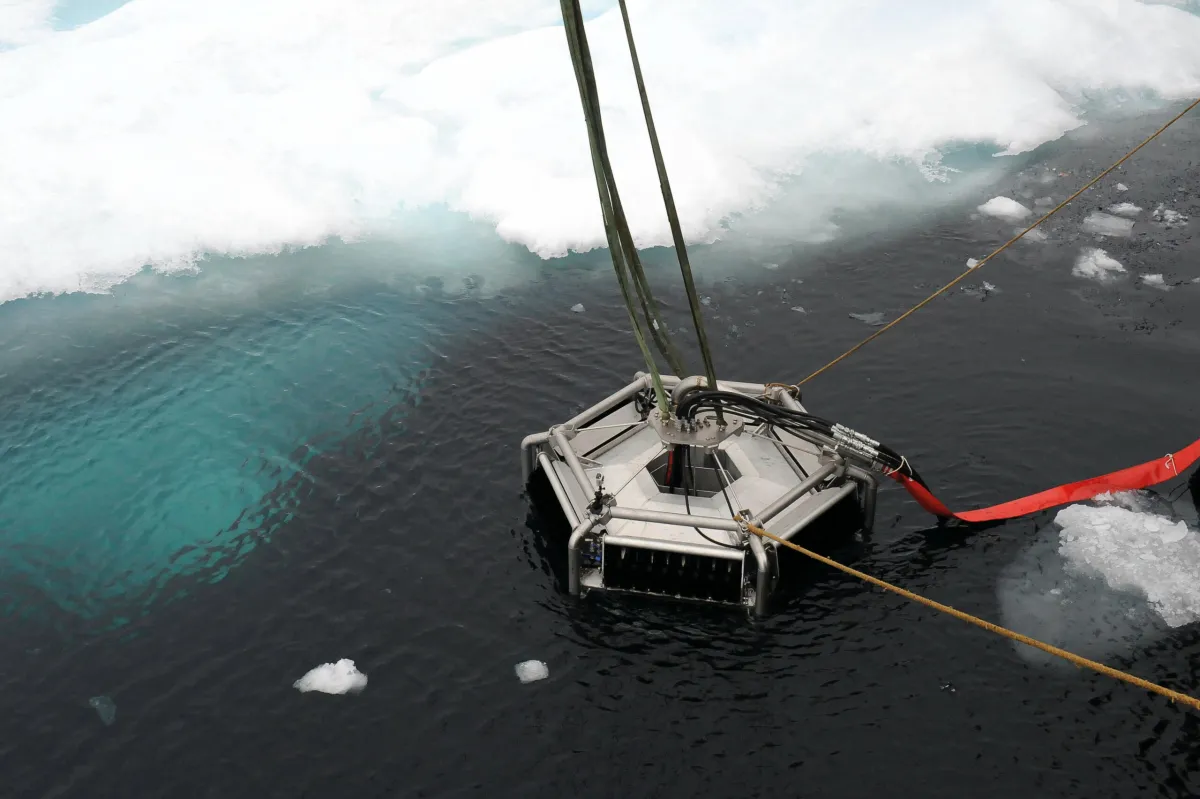
For years, Norway has positioned itself as a frontrunner in the race to tap into the vast reserves of metals buried in the ocean floor, such as copper and rare earth elements, which are vital for green technologies like electric vehicles, wind turbines, and solar panels. Oslo had planned to open large swathes of the Arctic seabed for exploration next year, arguing that the transition to renewable energy requires access to critical minerals. However, the plan met fierce opposition from environmental groups and a coalition of 32 nations, including Germany, France, Canada, and Brazil, all of whom have called for a moratorium on deep-sea mining until more is known about its ecological impact.
“This is a crucial win in the fight against deep-sea mining. It should be the nail in the coffin for this destructive industry,” said Frode Pleym, head of Greenpeace Norway. The environmental organization, a vocal opponent of deep-sea mining, has framed the decision as a landmark moment in global efforts to halt the nascent industry before it gains traction.
The political stakes surrounding deep-sea mining in Norway are intensifying ahead of the September elections. While the current government, comprising the Labour and Centre Parties, has halted licensing for now, the opposition Conservatives and Progress Party, both leading in opinion polls, have signalled their support for seabed mining. “If a new government attempts to reopen the licensing round, we will fight relentlessly against it,” warned Greenpeace’s Pleym.
Norway’s Arctic seabed is believed to hold “substantial” reserves of metals and rare earth elements, according to a 2023 government report. Preliminary resource estimates have drawn interest from at least three Norwegian start-ups—Loke Marine Minerals, Green Minerals, and more—all of which had planned to participate in the now-shelved licensing round.
The companies declined to comment on the government’s decision, leaving uncertainty about how the suspension will impact their plans.
Despite the growing opposition, advocates for deep-sea mining argue that the industry is crucial for securing the raw materials needed to power the global energy transition. As demand for critical minerals surges, proponents contend that seabed mining offers a less invasive alternative to land-based extraction, which has often been criticized for its environmental and social costs.
Yet environmentalists and scientists remain deeply skeptical, pointing to the vast unknowns surrounding the ecological consequences of mining the ocean floor. Critics warn that disturbing sensitive marine ecosystems, many of which remain largely unexplored, could have irreversible impacts on biodiversity and the health of the oceans. These concerns have prompted a growing international push for a moratorium on deep-sea mining, with France recently becoming one of the most prominent nations to endorse such a stance.
The suspension of Norway’s seabed mining plans reflects a broader reckoning within the country’s resource-driven economy. While Norway’s vast oil and gas reserves have made it one of the wealthiest nations in the world, the government is increasingly navigating the tension between its economic reliance on resource extraction and mounting calls for environmental responsibility.